
English| EUR
Suggested for you
More currencies
Choose a language
A few kilometres northeast of Quepos, the Damas estuary threads brackish channels through red and black mangroves that shelter silky anteaters, white-faced capuchins and roosting boat-billed herons. Departures here are governed less by a printed timetable than by the height of the water. This damas island mangrove tour costa rica guide explains how those tides shape a visit.
Quick answer
The Damas estuary is open 07:00–17:00 every day of the week, with free entry at 0 USD; individual boat operators set their own charges for the trip itself. Departure times shift daily because the channels are tide-dependent, so the practical arrival window runs 07:00–16:00. Morning and late-afternoon runs generally coincide with the most active wildlife.
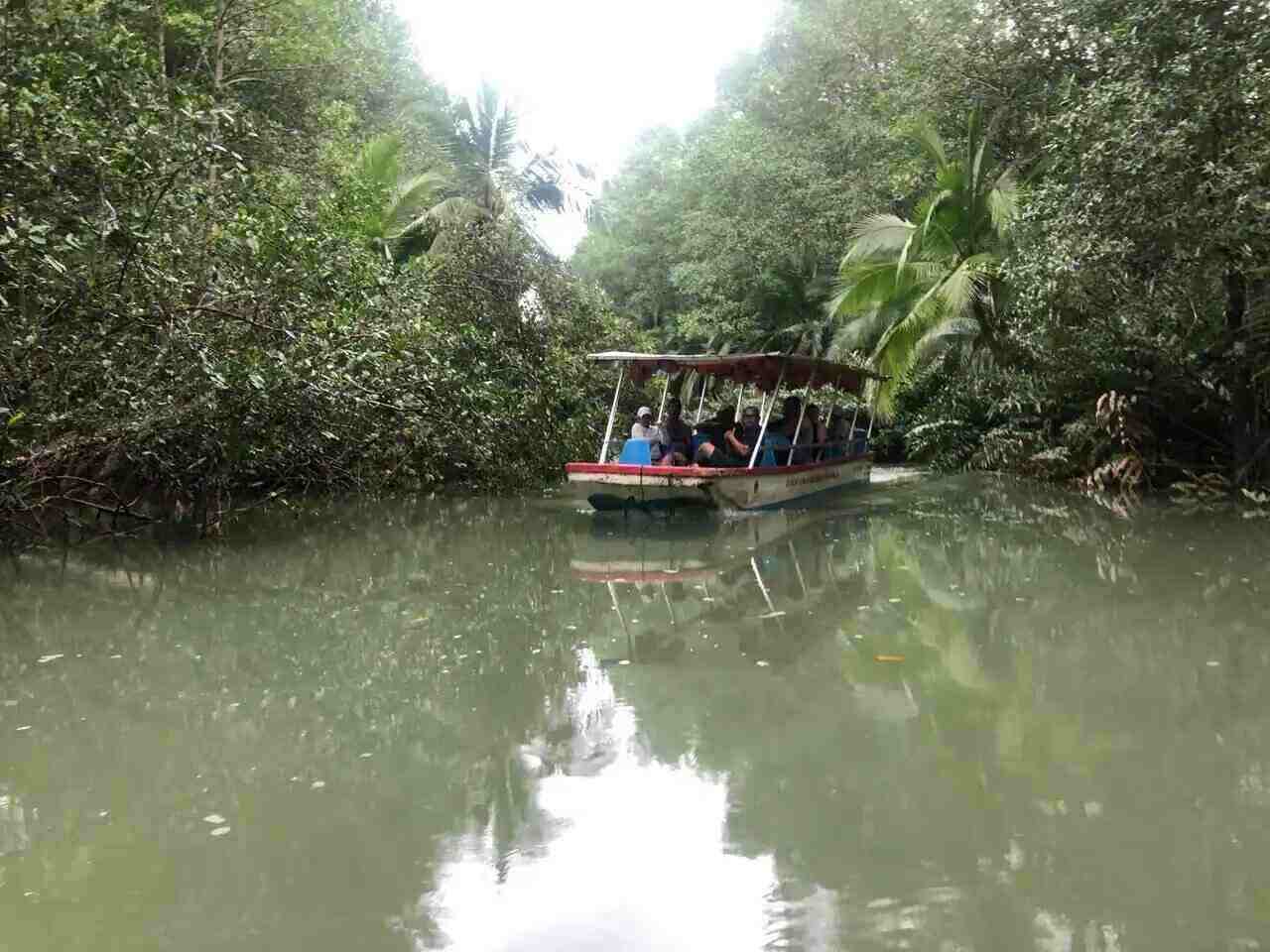
The mangroves at Damas Island are not one forest but several, sorted by salt tolerance: red mangroves hold the outer channels on stilted prop roots, black and white mangroves take the higher ground behind them, and the whole system rises and falls by more than two metres with the Pacific tide. That vertical range is why a damas island mangrove tour costa rica cannot run to a fixed hourly schedule. At low water, the narrow back channels drain to mud; at high water, boats slip beneath branch canopies that would be metres overhead six hours earlier. Most visitors arrive from Quepos or Manuel Antonio, and the estuary itself sits at Damas Island, Quepos, Costa Rica. The site is open daily from 07:00 to 17:00 and carries no admission charge — the money changes hands with the boat operators, not at a gate. Vessels range from covered pangas seating a dozen to smaller kayaks used on calmer stretches. Naturalist guides carry spotting scopes, which matters more than it sounds: the estuary's headline species are small and still. Silky anteaters curl in tree forks. Proboscis bats line trunks in grey rows. Mangrove hummingbirds, endemic to Costa Rica's Pacific coast, work the pale flowers, while American crocodiles hold the mudbanks and three-toed sloths hang in the cativo above. What to do with that information is straightforward. Treat the tide table, not the clock, as the organising fact of the day, and expect an operator to name a departure time only a day or two ahead. Morning runs are cooler and typically better for birds; afternoon trips tend to be quieter on the water. Rain in the September–October green season raises river inflow and can cloud the channels, though wildlife activity does not stop. Anyone comparing a Quepos mangrove boat trip against the drier forest walks at Manuel Antonio should understand these are complementary rather than interchangeable — the estuary delivers reptiles, waterbirds and nocturnal mammals that the national park trails rarely produce. Booking a damas island mangrove tour costa rica through a licensed operator secures both the boat and a guide who knows which bend the anteaters favoured that week.
“Treat the tide table, not the clock, as the organising fact of the day.”
The best arrival window for a Damas Island mangrove tour is 07:00–16:00, as mangrove ecosystem activity is heavily dictated by tidal patterns. Navigating the estuary requires specific tide levels, and wildlife activity is typically most observable during the cooler morning or late afternoon hours.
Warm, dry; 28°C–32°C
Low tides during these months often allow for better visibility of tree roots and wildlife.
Humid, frequent rain; 26°C–30°C
Afternoon rains are common, making morning tours the most reliable choice for consistent conditions.
—
Arriving at 07:00 often provides the calmest water conditions and increased opportunities to observe nocturnal species transitioning to rest.
Verdict: Weekday mornings within the 07:00–16:00 arrival window offer the most consistent access to wildlife and stable tidal conditions.
Damas Island Mangrove Tour operates daily throughout the week. Visitors can access the area during the established operational hours.
Access to the Damas Island estuary itself is free for all visitors. However, exploring the mangroves requires a guided boat service provided by authorized local operators.
Verdict: While estuary access is free, visitors pay varying rates for guided boat tours depending on the operator selected.
Damas Island is located just north of Quepos, accessible primarily by road transit from the main town center. Most visitors reach the departure points for mangrove tours by arranging transportation to the designated docks along the estuary.
Follow Route 618 north from Quepos center toward Damas
Request transport from Quepos town center to the Damas estuary docks
Local shuttle or public bus transit toward Damas/Esterillos
Confirm your specific meeting point with your tour provider in advance, as multiple docks exist along the estuary. Arriving at the designated departure area 15 minutes before your scheduled boat time ensures a prompt boarding process.
A few decisions made in advance — boat booking, repellent, footwear — shape how comfortable the mangrove channels feel once you are on the water.
Everything you need to know about damas island mangrove tour costa rica
Entry to the estuary itself is 0 USD, as it is a natural waterway. However, you will need to pay individual tour operators for boat services, which are required for exploration.
The best arrival window is 07:00–16:00, as tour times are highly dependent on the daily tide levels. Early morning or late afternoon slots typically offer the most active wildlife viewing opportunities.
While the estuary is a public area, exploring the mangrove network safely and effectively requires a licensed boat operator. Self-guided navigation is generally not recommended or possible due to the complex root systems and shifting tides.
Yes, this activity is generally family-friendly and suitable for children. Operators often provide life jackets and educational insights that make the experience engaging for younger visitors.
Visitors frequently observe white-faced capuchin monkeys, silky anteaters, green iguanas, and various species of colorful birds. The dense vegetation and tidal channels provide a protected habitat for these animals.
The area is open daily from 07:00 to 17:00. Please plan your visit within the recommended arrival window to ensure your tour aligns with tide schedules.
It is recommended to bring sunscreen, insect repellent, a hat, and a camera with a waterproof case. Wear comfortable clothing and footwear that can handle a bit of water exposure.
Damas Island is located in Quepos, Costa Rica. You can reach out to local providers at +50627772052 for specific meeting points or transportation arrangements from your hotel.
Monkey Mangrove Tours
Read more Tickets & toursBoat Tours with Lunch
Read more GuideKayak or Boat Tour Comparison
Read more Tickets & toursDamas Island Mangrove Kayak Tour
Read more Tickets & toursDamas Island Mangrove Boat Tour
Read more Tickets & toursDamas Island Mangrove Night Tour
Read more